Welcome
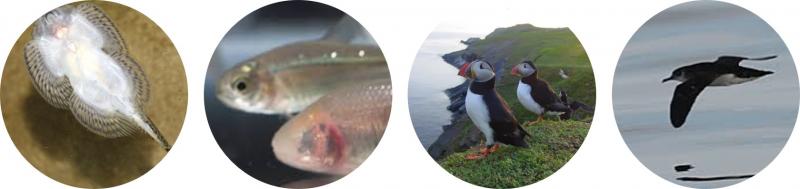
Our group's research focuses on behavioural and ecological aspects of animal navigation and spatial cognition, using a number of different species and a variety of state-of-the-art sensor technologies. We study the contribution of individual cognitive capabilities and navigational strategies, and of the ecological, sensory, and social environments to animal movement.
We are based at the Department of Zoology, University of Oxford, and are part of the Animal Behaviour Research Group. Please use the tabs at the top to navigate the website and to find out more about our research, members, publications and funding.
Recent Publications
"Individual strategies and release site features determine the extent of deviation in clock-shifted pigeons at familiar sites." Animal Cognition (2013).
"Pairs of pigeons act as behavioural units during route learning and co-navigational leadership conflicts." The Journal of Experimental Biology 216 (2013): 1434-1438.
"Not just passengers: pigeons, Columba livia, can learn homing routes while flying with a more experienced conspecific." Proceedings of the Royal Society of London, Series B 280, no. 1750 (2013): 1471-2954.
"Behavioural mapping of a pelagic seabird: combining multiple sensors and a hidden Markov model reveals the distribution of at-sea behaviour." Journal of the Royal Society Interface FirstCite Online (2012).
"Three-dimensional spatial representation in freely swimming fish." Cognitive Processing 13, no. S1 (2012): 107-111.
"Geolocators Reveal Migration and Pre-Breeding Behaviour of the Critically Endangered Balearic Shearwater Puffinus mauretanicus." PLoS ONE 7, no. 3 (2012): e33753.